Cultivating Emotional Intelligence through the Humanities in Spain
-
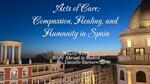
Emotional Intelligence Documentary - Acts of Care: Compassion, Healing, and Humanity in Spain
Danielle P. Barber
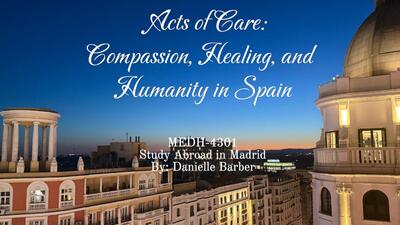
Acts of Care: Compassion, Healing, and Humanity in Spain explores the role of compassion as an essential component of healing through the lens of medical humanities. While modern medicine has achieved scientific advances, this documentary argues that healing extends beyond the treatment of disease and includes the emotional, social, and cultural dimensions of human experience. Using footage collected throughout Madrid and Toledo, the film examines how compassion is expressed in everyday life through community, art, music, and public spaces. Scenes from plazas, street performances, and flamenco shows highlight the importance of human connection, belonging, and shared experiences in promoting well-being. The documentary also analyzes significant Spanish artworks, including Picasso's Guernica, Velázquez's Las Meninas, and Goya's Saturn Devouring His Son, demonstrating how art fosters empathy by inviting viewers to confront suffering, vulnerability, and resilience. Incorporating Antonio Machado's poetry, the film further explores how literature can highlight the uncertainties of illness, caregiving, and the human condition. Through these interdisciplinary perspectives, the documentary connects key themes from medical humanities, including ethics, history, art, literature, and sociology. Ultimately, Acts of Care suggests that compassion is not confined to healthcare settings but is woven into the fabric of everyday life. By examining how people care for one another in both ordinary and extraordinary ways, the documentary argues that compassion remains one of the most powerful forces in promoting healing, dignity, and human connection.
-
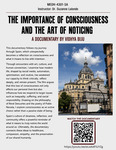
Emotional Intelligence Documentary - The Importance of Consciousness and the Art of Noticing
Vidhya M. Biju
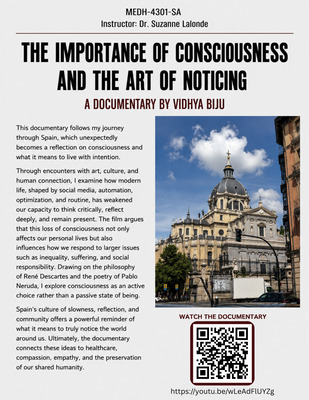
This documentary follows my journey through Spain, which unexpectedly becomes a reflection on consciousness and what it means to live with intention. Through encounters with art, culture, and human connection, I examine how modern life, shaped by social media, automation, optimization, and routine, has weakened our capacity to think critically, reflect deeply, and remain present. The film argues that this loss of consciousness not only affects our personal lives but also influences how we respond to larger issues such as inequality, suffering, and social responsibility. Drawing on the philosophy of René Descartes and the poetry of Pablo Neruda, I explore consciousness as an active choice rather than a passive state of being. Spain's culture of slowness, reflection, and community offers a powerful reminder of what it means to truly notice the world around us. Ultimately, the documentary connects these ideas to healthcare, compassion, empathy, and the preservation of our shared humanity.
-
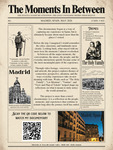
Emotional Intelligence Documentary - The Moments In Between: What We Notice, What We Keep
Giselle Guzman
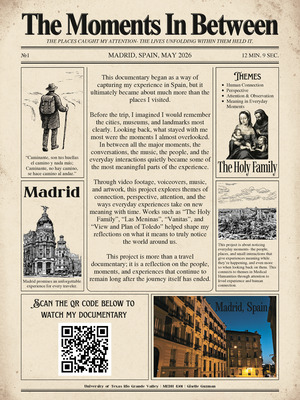
This documentary began as a way of capturing my experience in Spain, but it ultimately became about much more than the places I visited.
Before the trip, I imagined I would remember the cities, museums, and landmarks most clearly. Looking back, what stayed with me most were the moments I almost overlooked. In between all the major moments, the conversations, the music, the people, and the everyday interactions quietly became some of the most meaningful parts of the experience.
Through video footage, voiceovers, music, and artwork, this project explores themes of connection, perspective, attention, and the ways everyday experiences take on new meaning with time. Works such as “The Holy Family”, “Las Meninas”, “Vanitas”, and “View and Plan of Toledo” helped shape my reflections on what it means to truly notice the world around us.
This project is more than a travel documentary; it is a reflection on the people, moments, and experiences that continue to remain long after the journey itself has ended.
-
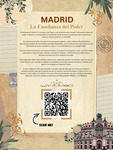
Emotional Intelligence Documentary - Madrid: La Enseñanza del Poder
Karla I. Jimenez-Valencia
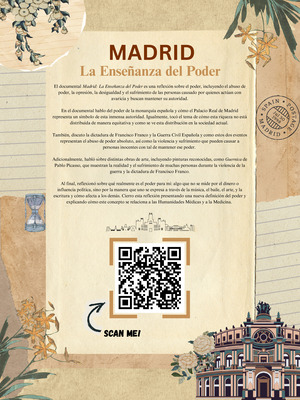
El documental Madrid: La Enseñanza del Poder es una reflexión sobre el poder, incluyendo el abuso de poder, la opresión, la desigualdad y el sufrimiento de las personas causado por quienes actúan con avaricia y buscan mantener su autoridad.
En el documental hablo del poder de la monarquía española y cómo el Palacio Real de Madrid representa un símbolo de esta inmensa autoridad. Igualmente, tocó el tema de cómo esta riqueza no está distribuida de manera equitativa y como se ve esta distribución en la sociedad actual.
También, discuto la dictadura de Francisco Franco y la Guerra Civil Española y como estos dos eventos representan el abuso de poder absoluto, así como la violencia y sufrimiento que pueden causar a personas inocentes con tal de mantener ese poder.
Adicionalmente, habló sobre distintas obras de arte, incluyendo pinturas reconocidas, como Guernica de Pablo Picasso, que muestran la realidad y el sufrimiento de muchas personas durante la violencia de la guerra y la dictadura de Francisco Franco.
Al final, reflexionó sobre qué realmente es el poder para mí: algo que no se mide por el dinero o influencia política, sino por la manera que uno se expresa a través de la música, el baile, el arte, y la escritura y cómo afecta a los demás. Cierro esta reflexión presentando una nueva definición del poder y explicando cómo este concepto se relaciona a las Humanidades Médicas y a la Medicina.
-
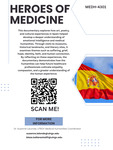
Emotional Intelligence Documentary - The Art and Poetry of Emotions
Blaze Kallarackal
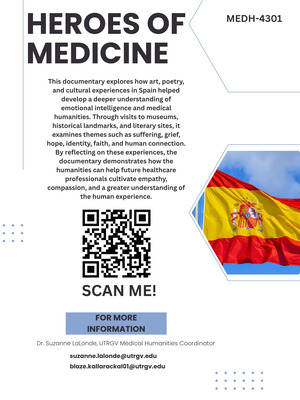
This documentary explores how art, poetry, and cultural experiences in Spain contribute to the development of emotional intelligence and their relevance to the field of Medical Humanities. Through visits to museums, historical landmarks, religious sites, and cultural centers in Madrid and Toledo, the project examines how artistic and literary works can deepen our understanding of human emotions and experiences.
The documentary focuses on themes such as identity, suffering, grief, hope, faith, resilience, and human connection. Works by Antonio Machado, Federico García Lorca, Pablo Picasso, Francisco Goya, and other Spanish artists and poets serve as focal points for reflection. Particular attention is given to Picasso’s Guernica, which powerfully illustrates the emotional impact of trauma and human suffering, and to Lorca’s Lament for Ignacio Sánchez Mejías, which explores grief and memory.
By connecting these works to healthcare, the documentary demonstrates how the humanities can help future healthcare professionals cultivate empathy, compassion, self-awareness, and emotional intelligence. Patients are more than diagnoses; they are individuals with unique stories, emotions, and experiences. Understanding these human dimensions is an essential component of compassionate care.
Ultimately, this project argues that art and poetry provide valuable tools for understanding the human condition and can enhance the ability of healthcare providers to connect with patients. Through personal reflection and cultural immersion, the documentary highlights the important role that Medical Humanities can play in fostering more empathetic and emotionally aware healthcare professionals.
-
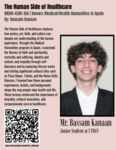
Emotional Intelligence Documentary - The Human Side of Healthcare: Exploring the Medical Humanities in Spain
Bassam Kanaan
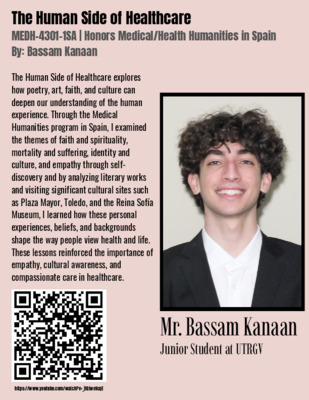
The film Moderna explains that Poetry, Art, Faith and Culture help us to step outside our own experience and be able to see another person’s experience as if it is reflected in a pool of water, enriching the experience of patient-centered care. In America (United States) I had an opportunity to explore these four themes through the Medical Humanities Program in Spain including Faith/Spirituality, Mortality/Suffering, Identity/Culture, and Empathy/Self Discovery. Each of the four themes was explored using literature along with cultural locations and art. Literature selected for this exploration included “My Heart Is in the East,” “Living and Dying,” “Madrid, Madrid, Madrid,” and “Traveler, Your Footprints.” Culturally relevant locations explored include “Nuestra Señora de Monte Sión,” “Plaza Mayor,” and “La Lluvia.” All of these experiences highlighted how our beliefs, traditions and personal experiences affect how we experience life and health care. In order for health care to be successful, it requires more than just scientific knowledge and also requires empathy, cultural competence, and understanding about who people are behind the patient.
-
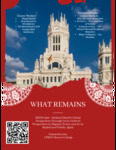
Emotional Intelligence Documentary - What Remains: Medical Humanities Perspectives from Madrid and Toledo, Spain
Samantha N. Lara
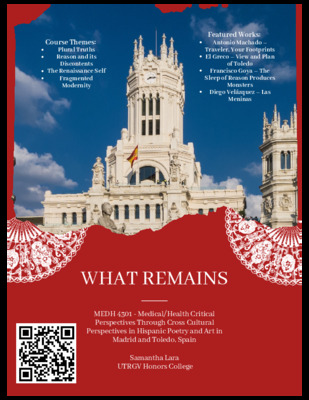
What Remains is a documentary inspired by a Medical/Health Humanities study abroad experience in Madrid and Toledo, Spain. Through museums, historic architecture, poetry, and everyday life, the film examines how human beings leave traces of themselves long after they are gone. Drawing on course themes including Plural Truths, Reason and its Discontents, The Renaissance Self, and Fragmented Modernity, the documentary explores how art and literature preserve experiences of suffering, identity, memory, and human connection. Works by Antonio Machado, Francisco de Quevedo, Francisco Goya, El Greco, and Diego Velázquez serve as lenses through which to examine the enduring nature of human stories. Ultimately, the project connects these ideas to Medical Humanities by emphasizing that patients are more than diagnoses; they are individuals with histories, relationships, and narratives that deserve understanding. The documentary asks not only what survives after death, but how people continue to live through memory, story, and the lives they touch.
-
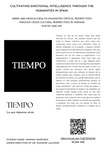
Emotional Intelligence Documentary - TIEMPO: Lo que dejamos atrás
Hannah E. Martinez
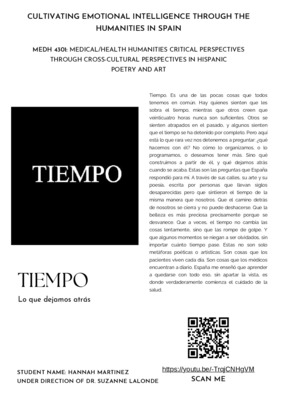
Tiempo. Es una de las pocas cosas que todos tenemos en común. Hay quienes sienten que les sobra el tiempo, mientras que otros creen que veinticuatro horas nunca son suficientes. Otros se sienten atrapados en el pasado, y algunos sienten que el tiempo se ha detenido por completo. Pero aquí está lo que rara vez nos detenemos a preguntar: ¿qué hacemos con él? No cómo lo organizamos, o lo programamos, o deseamos tener más. Sino qué construimos a partir de él, y qué dejamos atrás cuando se acaba. Estas son las preguntas que España respondió para mí. A través de sus calles, su arte y su poesía, escrita por personas que llevan siglos desaparecidas pero que sintieron el tiempo de la misma manera que nosotros. Que el camino detrás de nosotros se cierra y no puede deshacerse. Que la belleza es más preciosa precisamente porque se desvanece. Que a veces, el tiempo no cambia las cosas lentamente, sino que las rompe de golpe. Y que algunos momentos se niegan a ser olvidados, sin importar cuánto tiempo pase. Estas no son solo metáforas poéticas o artísticas. Son cosas que los pacientes viven cada día. Son cosas que los médicos encuentran a diario. España me enseñó que aprender a quedarse con todo eso, sin apartar la vista, es donde verdaderamente comienza el cuidado de la salud.
-
Emotional Intelligence Documentary - Tradition and Modernity in Spain
Kevin Martinez and Suzanne Lalonde
-
Emotional Intelligence Documentary - Cuerpos en Disputa: Arte, Control y Mirada
Celeste E. Medrano
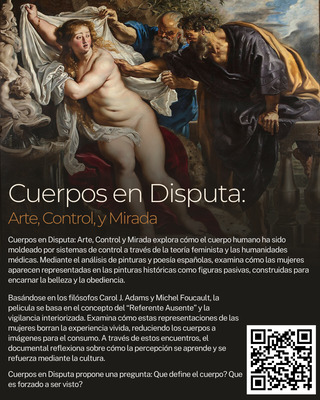
Cuerpos en Disputa: Arte, Control y Mirada explora cómo el cuerpo humano ha sido moldeado por sistemas de control a través de la teoría feminista y las humanidades médicas. Mediante el análisis de pinturas y poesía españolas, examina cómo las mujeres aparecen representadas en las pinturas históricas como figuras pasivas, construidas para encarnar la belleza y la obediencia.
Basándose en los filósofos Carol J. Adams y Michel Foucault, la pelicula se basa en el concepto del “Referente Ausente” y la vigilancia interiorizada. Examina cómo estas representaciones de las mujeres borran la experiencia vivida, reduciendo los cuerpos a imágenes para el consumo. A través de estos encuentros, el documental reflexiona sobre cómo la percepción se aprende y se refuerza mediante la cultura.
Cuerpos en Disputa propone una pregunta: Que define el cuerpo? Que es forzado a ser visto?
-
Emotional Intelligence Documentary - The Art of Compassion: Learning from Spain, Poetry, and Medicine
Emily E. Morin
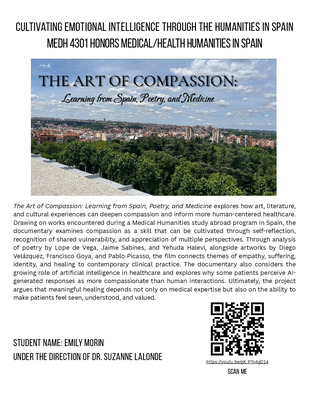
The Art of Compassion: Learning from Spain, Poetry, and Medicine explores how art, literature, and cultural experiences can deepen compassion and inform more human-centered healthcare. Drawing on works encountered during a Medical Humanities study abroad program in Spain, the documentary examines compassion as a skill that can be cultivated through self-reflection, recognition of shared vulnerability, and appreciation of multiple perspectives. Through analysis of poetry by Lope de Vega, Jaime Sabines, and Yehuda Halevi, alongside artworks by Diego Velázquez, Francisco Goya, and Pablo Picasso, the film connects themes of empathy, suffering, identity, and healing to contemporary clinical practice. The documentary also considers the growing role of artificial intelligence in healthcare and explores why some patients perceive AI-generated responses as more compassionate than human interactions. Ultimately, the project argues that meaningful healing depends not only on medical expertise but also on the ability to make patients feel seen, understood, and valued.
-
Emotional Intelligence Documentary - The Journey, Not the Destination: A Spain Reflection
Elise I. Palacios
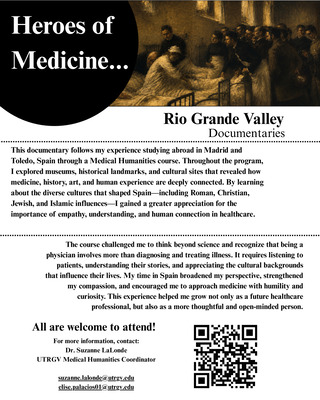
The Journey, Not the Destination follows my study abroad experience in Madrid and Toledo, Spain through a Medical Humanities course. Through art, history, culture, and personal reflection, I explore how travel broadened my understanding of the human experience and shaped my perspective as a future physician. More than a story about a place, this documentary is about growth, empathy, and the lessons we learn along the journey.
-
Las Caras de Belleza en Madrid
Virginia L. Piccirillo
Las Caras de la Belleza en Madrid, España explora cómo la belleza femenina ha sido representada, celebrada y cuestionada a través del arte, la poesía y la experiencia cultural. A través de museos como el Prado y el Thyssen-Bornemisza, este documental analiza la evolución de los ideales de belleza desde representaciones clásicas inspiradas por Venus hasta interpretaciones contemporáneas que desafían los estándares tradicionales. Mediante obras visuales, el poema Ilustre y hermosísima María y reflexiones personales, el proyecto invita a reconsiderar la relación entre belleza, identidad y feminidad, demostrando que la verdadera belleza existe en múltiples formas y perspectivas.
-
Emotional Intelligence Documentary - La Experiencia Humana en Tres Partes: La Vida, El Cambio, y La Muerte
Aislin Ramirez
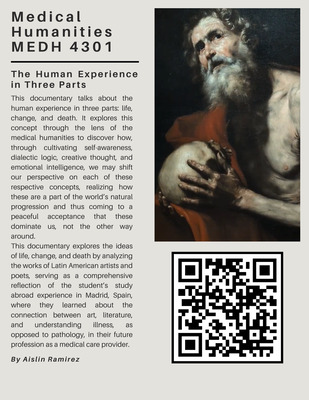
This documentary talks about the human experience in three parts: life, change, and death. It explores this concept through the lens of the medical humanities to discover how, through cultivating self-awareness, dialectic logic, creative thought, and emotional intelligence, we may shift our perspective on each of these respective concepts, realizing how these are a part of the world’s natural progression and thus coming to a peaceful acceptance that these dominate us, not the other way around.
This documentary explores the ideas of life, change, and death by analyzing the works of Latin American artists and poets, serving as a comprehensive reflection of the student’s study abroad experience in Madrid, Spain, where they learned about the connection between art, literature, and understanding illness, as opposed to pathology, in their future profession as a medical care provider.