


Division of Research - NASA Solar System Ambassador Online Discussions
Online Discussion with Dr. Thomas B. Spencer and Dr. Upal Roy
Files
Loading...
Creation Date
10-2026
Disciplines
Astrophysics and Astronomy
Description
RIO GRANDE VALLEY, TEXAS – Dr. Thomas B. Spencer, Sr. Associate Vice President for Research Operations at The University of Texas Rio Grande Valley and a NASA Solar System Ambassador, recently held an online discussion with Dr. Upal Roy of UTRGV’s Department of Health and Biomedical Sciences.
The conversation explored how the spaceflight environment can affect the brain and immune system, and how biomedical research may help protect astronauts during future long-duration missions.
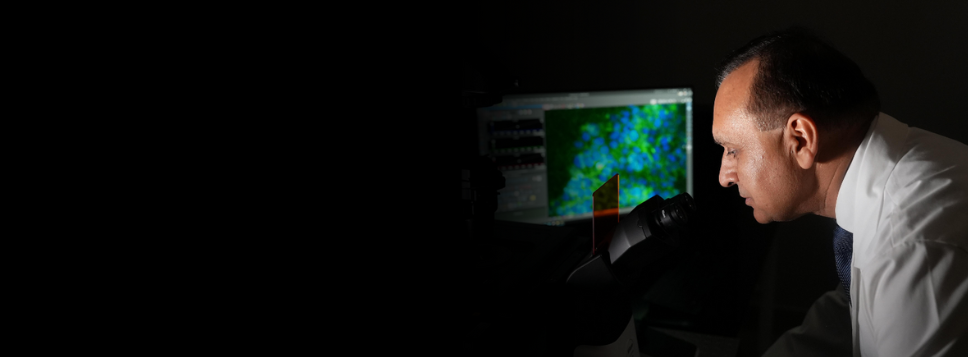
Roy’s research examines the central nervous system, neurological disorders, inflammation, and the development of new therapeutic approaches. During the discussion, he explained how biomedical expertise has expanded into space health research. Microgravity and space radiation can disrupt normal physiological processes, making it important to understand how the brain and its immune-signaling systems respond beyond Earth.
The central focus of the discussion was NASA’s Rodent Research-1 mission. Mice launched aboard the SpaceX-4 CRS-4 mission were housed on the International Space Station for 37 days. Roy and his collaborators analyzed brain tissue from those animals and compared the results with samples from ground-control and baseline groups.
Researchers found that spaceflight changed how the brain regulates inflammation and certain processes connected to dopamine, a chemical involved in movement, motivation, and other brain functions. Although the measured levels of dopamine and related chemicals did not change significantly, the findings show that the brain’s response to spaceflight is more complex than a simple increase or decrease in inflammation. Understanding these changes will be important for protecting astronauts during longer missions farther from Earth.
Roy connected this work to the broader challenge of safeguarding astronaut health during future missions to the Moon and Mars. Identifying how microgravity, radiation, and other spaceflight conditions affect the brain may help researchers recognize useful biomarkers and develop countermeasures before minor biological changes become serious health concerns.
His research at UTRGV has received NASA support through projects including Inflammation & Brain Health for Astronauts and Effect of Space Environment on Neuroinflammation. The work brings together researchers from UTRGV, NASA Ames Research Center, the University of Miami, Loma Linda University, Weill Cornell Medicine, Vanderbilt University Medical Center, and other institutions.
The research also provides meaningful opportunities for UTRGV students. Biomedical sciences student Angel A. Rodriguez served as first author of a 2026 publication examining inflammasome signaling and dopamine-related regulation in mouse brains from the Rodent Research-1 mission. Student participation in this work demonstrates that UTRGV students can contribute directly to interdisciplinary research addressing the biological challenges of human space exploration.
The discussion highlights the important role of biomedical science within the larger space-science community. Through Spencer’s work as a NASA Solar System Ambassador, UTRGV continues to connect NASA-supported research with the Rio Grande Valley, while showing students that careers in space exploration extend well beyond engineering and astronomy.
For more information about NASA’s Solar System Ambassador program, visit https://solarsystem.nasa.gov/ambassadors/2480/.
Physical Description
.MP4, .SRT, 00:33:33, 1357 kbps, 25fps, 327 MB
Recommended Citation
Spencer, Thomas B. and Roy, Upal, "Online Discussion with Dr. Thomas B. Spencer and Dr. Upal Roy" (2026). Division of Research - NASA Solar System Ambassador Online Discussions. 5.
https://scholarworks.utrgv.edu/research_nasa/5
Subtitles (.SRT)
Roy_Spencer_NASA_Final-en-US.vtt (69 kB)
Subtitles (.VTT)
Roy_Spencer_NASA_Final-en-US.docx (20 kB)
Transcript
