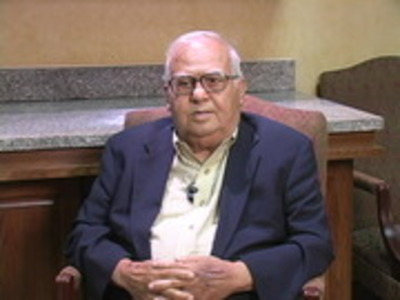
-
Eligio (Kika) de la Garza Oral History Interview 1
Eligio (Kika) de la Garza, Diane Tyink, and Joe Reyna
0:00 Introduction
0:30 Background information – where you born?
1:00 Can you talk a little bit about your family (mother, father, brothers/sisters)?
2:00 First years in School
3:00 Kika lived with his uncles while he was studying at Mission, Texas.
4:20 How did you get the nickname “Kika”?
6:00 Can you tell us some childhood memories that you think about right now?
8:00 Neighborhood friends and the Edinburg canal.
11:00 How long were you in the Navy?
12:00 What kind of influences did you have while you were growing up (people, grandmother, uncles)?
12:30 Kika’s uncles – main and great influences to his life
14:00 Were you were in any type of sport when you were in Mission High school?
15:00 Football and basketball player.
17:30 Kika did his associate at Edinburg Pan American University and then went to Saint Mary at San Antonio, Texas to start his law school degree.
18:50 Can you just give us an idea about what has changed the most in the Valley since you were growing up compared to nowadays?
21:15 How old do you were when you joined the Navy?
22:00 Kika’s experiences at the Navy.
31:00 Divisions at the Navy.
35:00 Kika, back from the Navy continues his studies at Saint Mary at San Antonio.
36:30 Why did you decide it to study law?
36:40 Kika grew up in a political family.
40:00 Kika ran for the legislature.
45:00 Legislature facts.
51:00 While you were in the Texas legislature, did you work on any agriculture issues?
52:00 Is anything else you want to mention or add regarding to the Texas legislature?
-
Eligio (Kika) de la Garza Oral History Interview 2
Eligio (Kika) de la Garza, Diane Tyink, and Joe Reyna
0:00 Introduction.
00:25 Can you talk a little bit about the first time you ran for the congress?
2:50 Did you have money for the first campaign?
3:40 First run for the congress experiences.
4:40 Kika has the support of his friends, family, and campaign manager for his first campaign.
6:30 Kika remembers that there were not airports so it was harder to transport from place to place. “It was challenging but interesting.”
7:00 Some of the congress members of South Texas background.
8:30 Political powers at that time.
9:45 What were some of the issues that you faced during your first campaign?
10:00 Education – one of the major issues.
10:40 Health – Kika supported Medicare and Medicaid.
13:00 It was a hard campaign.
13:00 They did not have a lot of money for the first campaign, however they had a lot of support.
13:30 People who supported Kika’s first campaign.
14:30 Texas delegation – members of congress.
16:00 Kika was welcomed to the congress.
16:30 Kika joined the Agriculture committee.
17:00 Kika the youngest man at the congress at that time.
17:35 Kika became chair of the Agriculture committee – the youngest chair of the committee.
20:40 Political leaders.
22:10 Kika was invited, together with his wife, to almost all the functions of the White House.
25:00 Relations with Mexico and South America.
25:50 Kennedy and the new progressive programs.
27:00 Local Education.
30:00 Federal Education and the creation of new buildings.
34:00 Food programs for poor areas.
44:00 Founding for food programs and the results.
46:00 Kika explains that these programs were also nutritional.
48:50 Benefits of the nutritional programs.
50:26 Do you think that the money spent in these programs impacted the economy of the area?
1:00:00 End of the interview.
-
Eligio (Kika) de la Garza Oral History Interview 3
Eligio (Kika) de la Garza, Diane Tyink, and Joe Reyna
0:00 Introduction.
0:20 Kika works on Johnson’s campaign.
2:25 Kika's run for Congress.
3:00 What were your general thoughts in the Vietnam War?
7:04 Involvement in Vietnam.
10:31 Kika’s loyalty to President Johnson.
11:33 The way Kika was helping on the war.
15:35 Kika changes his views about the involvement in the Vietnam War.
16:45 Background of the people that Kika met at the war.
24:22 Vietnamese movement.
24:26 Kika’s position.
26:11 Political media disaster.
27:13 Do you remember what your thoughts were when you realized that Johnson was not going to run for reelection?
27:33 Did Johnson’s decision affect you?
28:43 Good Spanish speaking friends at the White House.
31:29 Did you support the program of 1968 for this area?
32:43 Did you support President Kennedy's movement?
32:57 Kika talks about his bilingual background.
34:27 Kika talks about his education background.
35:00 Mexican-Americans in Politics
35:15 Elected Hispanics
35:44 Martin Luther King assassinated and the Civil rights movement.
43:11 Violence at the convention in Chicago.
43:35 Changing the system peacefully.
46:37 What were the main concerns about switching from a democratic president to a republican president?
47:00 Did you centralize services?47:23 City councils.
48:00 Do you think federalism is a good model of government?
50:16 Kika’s campaign.
51:00 Agriculture: feeding the people
54:00 Did you have more work because of the centralization?
58:00 Is there anything else you want to add?
1:01:00 Influence of Texas at the federal level.
-
Eligio (Kika) de la Garza Oral History Interview 4
Eligio (Kika) de la Garza, Diane Tyink, and Joe Reyna
0:00 Introduction.
0:35 General committee work.
1:15 Can you tell us about your days working on the agriculture committee before you became chairman?
3:00 Agriculture committee background.
6:00 Third world countries became more involved in shipments.
9:17 What kind of issues did you discuss in the committee?
10:00 Grapefruit in Rio Grande Valley.
13:00 Production and agriculture.
14:32 Import and export vegetables.
16:55 Third world countries became more involved in shipments.
18:00 The port of Brownsville was the major port.
20:00 How Technology started to be involved?
21:40 Grapefruit in Rio Grande Valley.
26:00 What are the benefits that the Valley has in the agriculture field?
33:00 Research in agricultural production.
36:30 Russia circumstances of production.
38:00 Vegetables and fruits to the operation of agriculture.
40:15 What areas besides the Valley do you think are good for growing grapefruit?
44:00 Transportation.
46:30 Has the agriculture at South Texas has increased?
48:00 Producing Electricity for both sides of the River.
52:18 Is there is an agreement between United States and Mexico for the Electricity?
53:00 Saving money for the government and the people.
54:00 Can you talk about the purposes of committee work?
56:00 Is there anything else that you want to add?
-
Eligio (Kika) de la Garza Oral History Interview 5
Eligio (Kika) de la Garza, Diane Tyink, and Joe Reyna
0:00 Introduction
0:28 What were your thoughts and feelings with regards to Jimmy Carter loss to Reagan in 1980?
1:33 Were you surprised that Jimmy Carter lost?
2:40 Do you think he lost because of the economic problems the country was having?
4:06 Do you remember the general feeling in Washington right after Reagan got elected?
5:54 So the people, generally were fearful of him coming to the presidency?
6:25 Reagan was not all knowledgeable on agriculture so he used to rely on Kika’s input in terms of agriculture.
7:50 The house was completely divided into Democrats and Republicans
9:30 Kika is against building a wall between United States and Mexico.
13:00 Can you talk about the 1980's and the types of social problems that you noticed the nation was facing at that time?
19:30 What was your work relationship with John Rusling Block (U.S. Secretary of Agriculture)?
27:00 Kika’s input helped the people of Mexico and the United States to coordinate efforts, a good working relationship.
36:30 Hundreds of young Mexicans, in order to come to United States; they volunteer to serve in the Army.
38:00 Agriculture benefits to the economy; by bringing Mexicans to work either legally or illegally.
40:00 VA hospital in the Valley and its challenges.
44:00 Farmer rights regarding to production.
52:20 Is there anything else you want to add?
52:36 Earthquake in Mexico.
-
Eligio (Kika) de la Garza Oral History Interview 6
Eligio (Kika) de la Garza, Diane Tyink, and Joe Reyna
0:00 Introduction
0:30 Since George W. Bush was a Texan; how was your relationship with him and how did this relationship impact the Valley?
1:25 Was that good for the Valley once George W. Bush became president?
2:00 When he ran for reelection and lost to Bill Clinton; I think one of the biggest problems was the economy at that point… Did the economic issues impact the Valley at that time?
3:40 At the end of Cold War, did the change of government impact your work on the agriculture committee?
5:00 Kika’s relationship with Russian agriculture members.
7:27 How was your relationship with Bill Clinton?
8:00 President Bill Clinton had interest about Rio Grande Valley (South Texas area).
9:03 In 1994 they promised 40 million dollars to help Rio Grande Valley improving work and lives in the Valley.
15:00 Kika’s association with Mexico (regarding to Mexican products) and the impact of this association in both Mexico and the USA.
18:20 Can you tell us about the talks between USA and Europe, in regards to the Agricultural aspects?
20:00 Gap was positive for agriculture at some degree.
23:00 Agriculture in Mexico.
24:05 What was your relationship with Michael Espy (U.S. Secretary of Agriculture at that time)?
28:40 Agricultural products and its issues in Texas.
31:00 Can you talk about the first two years of Clinton presidency?
33:15 1994 midterm elections.
42:30 Is there anything you want to add that you can think of?
-
Eligio (Kika) de la Garza Oral History Interview 7
Eligio (Kika) de la Garza, Diane Tyink, and Joe Reyna
-
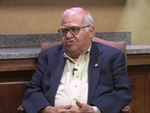
Eligio (Kika) de la Garza Oral History Interview 8
Eligio (Kika) de la Garza, Diane Tyink, and Joe Reyna
-
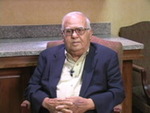
Eligio (Kika) de la Garza Oral History Interview 9
Eligio (Kika) de la Garza, Diane Tyink, and Joe Reyna