Rio Grande Valley Oral Histories
Please note that many oral history interviews may be difficult to hear due to the recording environment and technology available at the time of their original recording.
Please contact Special Collections & Archives for questions, email us.
-

Interview with Josefina Acosta Ibanez
Josefina Acosta Ibanez and Francisca Rodriguez
Born in 1920 in La Grulla, Starr County, Texas and recorded on 12 April 1987.
-

Interview with Francisca Aguilar
Francisca Aguilar and Juan Martin Guerra
Francisca Aguilar talks about prices of items, entertainment and transportation.
-
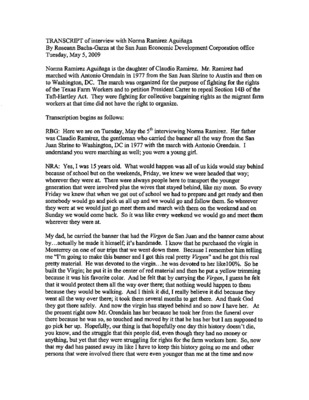
Interview with Norma Ramirez Aguiñaga
Norma Ramirez Aguiñaga and Roseann Bacha Garza
Norma Ramirez Aguiñaga reflects on her father's involvement in the 1977 march advocating for the rights of Texas Farm Workers, alongside Antonio Orendain. As a young girl of 15, she described the community's efforts to support this cause, with families taking turns to transport the children to join the marchers on weekends. Her father, Claudio Ramirez, created a handcrafted banner featuring the Virgen de San Juan, which symbolized their devotion and hope for protection throughout their journey. Norma now carries the responsibility of preserving this history and ensuring that the struggles and achievements of those farm workers are not forgotten, as she collaborates with others who were part of the movement to maintain this legacy through education and remembrance.
The conversation highlights the tension between Texas farm workers and the more recognized figures like Cesar Chavez, emphasizing that Chavez’s contributions primarily pertained to California. Norma asserts it was Orendain and his supporters who played a crucial role in the Texas movement, yet they have not received proper acknowledgment. She reflects on the historical significance of their work, including the establishment of "El Cuhamil" and the murals that symbolize the struggles faced by these workers.
-

Interview with Domingo Alcazar
Domingo Alcazar and Jose Trinidad Molina
Domingo Alcazar covers his school years at an early age. He also talks about his job and about education.
-

Interview with Oliver Cromwell Aldrich, Jr.
Oliver Cromwell Aldrich Jr. and Robert Everett Norton
Oliver Cromwell Aldrich, Jr. (1918-1993) is interviewed by Robert Norton on 1992-04-24 in Houston, Texas. Aldrich recollects his life in Hidalgo County, Texas (San Juan and Edinburg) from the 1920's through the 1950's. He talks about construction of highways, floodways, schooling, agriculture, personalities, frequency of freeze, and river.
-
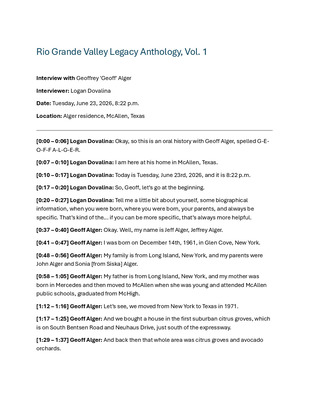
Interview with Geoffrey 'Geoff' Alger
Geoffrey 'Geoff' Alger and Logan Dovalina
Geoff Alger (b. 1961, Glen Cove, New York) was interviewed on June 23–24, 2026, at his home in McAllen, Texas, by Logan Dovalina. The interview covers Alger’s life and career as a museum professional deeply rooted in Rio Grande Valley history.
Alger recounts his family’s 1971 move from Long Island to McAllen, his parents’ museum careers (McAllen International Museum, Museum of South Texas History, Confederate Air Force), and his own path from a teenage volunteer to decade-long employment at the Confederate Air Force museum. He discusses later roles as curator and exhibits specialist at museums in Oregon and the Valley (Tillamook Air Museum, Evergreen Air & Space Museum, McAllen Heritage Center, Weslaco Cultural Museum, and Mission Historical Museum), including the major transformation of Mission’s exhibits during the COVID-19 closure.
Substantial portions focus on local history and memory: the citrus landscape of South Bentsen Road and the Neuhaus/Bentsen properties; canal systems and the former Botanical Gardens; cemeteries (Laurel Hill and San José); architecture and Southside Mission; folklore (Big Bird, the Devil in the Disco, La Llorona); and environmental change. Alger also reflects on the value of oral history, the work of figures such as Fran Isbell and Spud Brown, and his own efforts to create research libraries and document vanishing landscapes and stories.
-

Interview with Jesse Almaguer
Jesse Almaguer and Corina Cantu
Jesse Almaguer (b. 1906 in Adama, Mexico) reflects on his family background and how hard it was for him to make a living during the Great Depression.
-

Interview with Frank Anderson and Dorothy Anderson
Frank Anderson, Dorothy Anderson, and Sandra Veronica Barrera
Frank and Dorothy Anderson give an account of life in the 1930's to the present. Frank was born on December 21, 1916, and Dorothy was born November 27, 1921.
-
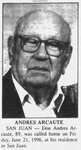
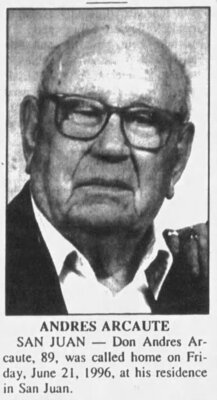
Interview with Andres Arcaute
Andres Arcaute and Pablo Cantu
Brief interview with Mr. Arcaute (1906–1996) about the early formation of San Juan and his reflections as a long-time resident
-

Interview with Miller F. Armstrong
Miller F. Armstrong
Miller F. Armstrong talks about the early days of Mission, Texas. He remembers the bandits and raids, and when the telephone was introduced in Mission in 1911. He received his degree as a lawyer then became a judge.
-

Interview with Margie Austin
Margie Austin and Silvia Ann Olivarez
Margie Austin talks about her life, education (Mission High School graduate), church, and the depression. Margie Austin was born on December 15, 1921.
-

Interview with Antonio L. Ayala
Antonio L. Ayala and Ricardo Alfredo Villarreal
Antonio Luis Ayala, born on 22 August 1918, talks about his service (1942-46) and achievements in World War II. Mr. Ayala served in 9th Armor Division, fought in the Battle of Bastogne, was held as a prisoner of war and interrogated by the German SS. He also discusses his family and life growing up in McAllen, Texas, as well as his readjustment to civilian life following the war. Antonio passed away on 15 November 1994.
-

Interview with Juanita Ayala
Juanita Ayala and Nora Cantu
Juanita Ayala was born in Los Ramones, Nuevo Leon. She talks about her husband and her three day wedding. She also mentions her last baby girl that she gave away to her oldest daughter.
-
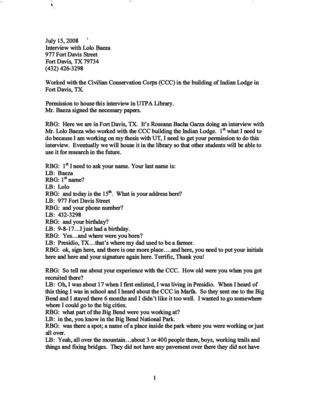
Interview with Dolores Soza "Lolo" Baeza
Dolores "Lolo" Soza Baeza and Roseann Bacha Garza
Lolo Baeza, a former member of the Civilian Conservation Corps (CCC), shared his experiences during an interview conducted in Fort Davis, Texas.
He detailed his recruitment at age 17 and his early work at Big Bend National Park, focusing on repairing trails and bridges amidst challenging conditions. Baeza discussed his role in fixing the "Indian Lodge," addressing roof leaks and additional renovations over two years, along with the camaraderie he established with fellow workers from diverse backgrounds.
He discusses the economic struggles of the Great Depression, his military service in World War II, and the establishment of a family business in Presidio, TX. The conversation also shed light on Baeza’s family history and ties to his Spanish heritage,
-

Interview with M. J. Baily
M. J. Baily and Mary Elva Salas
M. J. Baily talks about his teenage life, the depression and farming.
-
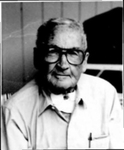
Interview with Gillespie Parish Baker - Part 01
Gillespie Parish Baker and Robert Everett Norton
Gillespie Parish Baker, born 1900 and died 23 September, 1976, discusses the life of his father, A.Y. Baker, an influential citizen of Edinburg. He gives a detailed description of his own life in Hidalgo County and Edinburg including observations on the Hidalgo-Reynosa bridge, beginning of Edinburg Junior College, trains, roads, and utilities.
-

Interview with Gillespie Parish Baker - Part 02
Gillespie Parish Baker and Robert Everett Norton
Gillespie Parish Baker, born 1900 and died 23 September, 1976, discusses the life of his father, A.Y. Baker, an influential citizen of Edinburg. He gives a detailed description of his own life in Hidalgo County and Edinburg including observations on the Hidalgo-Reynosa bridge, life, and changes in Edinburg.
-

Interview with Lilly Bell (West) Baker
Lilly Bell (West) Baker, Hattie Mae West, and Valerie Ramirez
Valerie Ramirez interviews Mrs. Baker and Mrs. West about the Restlawn Cemetery internments as well as prominent members of Edinburg's Black and African American community.
-
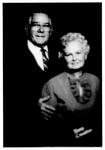
Interview with Jack William Baldwin
Jack William Baldwin and Robert Everett Norton
Jack William Baldwin, born on 12 January 1915, discusses his father coming down to the Rio Grande Valley, developer Roland Ernest Horn, Baldwin Mobile Home Manor, life experience in McAllen, his activities in business and civic work. He tells of changes in the dairy business and the expansion of the city. Jack passed away on 09 April, 2000.
-
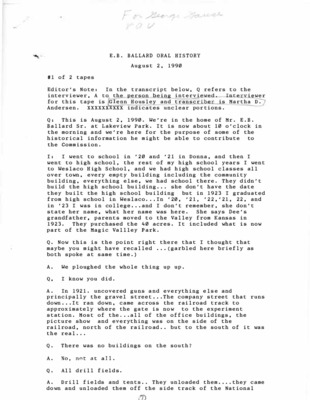
Interview with Everette B. Ballard
Everett B. Ballard, Glenn Housley, and Martha D. Anderson
This summary was generated using Adobe AI
The interview with E.B. Ballard on August 2, 1990, covers various historical and personal anecdotes, focusing on the development of the Rio Grande Valley in Texas during the early 20th century. Key themes include education and early life, agriculture and development, historical events and catastrophes, the Texas Rangers, National Guard camps in the area, land sales and settlements (Donna, Edcouch and Los Fresnos), and economic and social changes in the Valley.
-
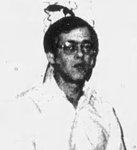
Interview with Everette B. Ballard (Part 1)
Everette B. Ballard and Aubrey B. Gates
This summary was generated with MS Co-pilot AI:
Part 1: Everette B. Ballard recounts his family’s move from Kansas to the Rio Grande Valley in 1920, describing the harsh travel conditions, primitive roads, and the challenges of clearing land for farming. He explains how they established citrus groves and a nursery business, later expanding into palms, avocados, and mangoes, and eventually managing thousands of acres of groves. Ballard shares experiences with floods, freezes, hurricanes, and evolving agricultural practices, emphasizing the resilience required to succeed. He reflects on the Valley’s transformation, his role in local organizations, and expresses pride in his lifelong contributions to its development. Part 2: Everette B. Ballard recalls early development efforts in the Rio Grande Valley, including building infrastructure like water towers and hotels by hand and the challenges of farming innovations such as introducing celery to the region. He describes the hard work and long hours during the area’s growth period, the impact of historical events like hurricanes and wars, and local geography changes over time. Ballard also shares stories about transportation routes, hidden treasures, and the construction of major projects like the Falcon Dam, emphasizing the transformation of the land and community through perseverance and resourcefulness.
-
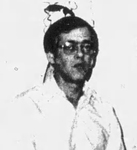
Interview with Everette B. Ballard (Part 2)
Everette B. Ballard and Aubrey B. Gates
Part 2: Everette B. Ballard recalls early development efforts in the Rio Grande Valley, including building infrastructure like water towers and hotels by hand and the challenges of farming innovations such as introducing celery to the region. He describes the hard work and long hours during the area’s growth period, the impact of historical events like hurricanes and wars, and local geography changes over time. Ballard also shares stories about transportation routes, hidden treasures, and the construction of major projects like the Falcon Dam, emphasizing the transformation of the land and community through perseverance and resourcefulness.
-
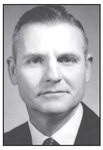
Interview with Joe Barbee
Joe Barbee and Aubrey B. Gates
Summary generated using MS Copilot (AI) The interview with Joe Barbee, recorded in 1973, reflects on his family’s pioneering role in Weslaco’s educational and agricultural development. Barbee recounts his parents’ contributions as early teachers, his father’s tenure as principal and superintendent, and the challenges of building a school system during the Depression and hurricane years. He also discusses the evolution of farming practices, from mule-powered irrigation to modern mechanization, emphasizing how advanced machinery transformed agriculture, boosted productivity, and supported economic growth. Finally, Barbee shares personal experiences, including his military service as a pilot in World War II and his later career in the farm implement business, highlighting the Valley’s progress and opportunities over time.
-

Interview with Eliza E. Barrera - Part 01
Eliza E. Barrera and Corina Cantu
Eliza E. Barrera talks about her life, her upbringing, social and religious background. She tells of her family history, mentions different tasks as a daughter, wife and mother. She talks about different remedies that her mother used.
-

Interview with Eliza E. Barrera - Part 02
Eliza E. Barrera and Corina Cantu
Eliza E. Barrera talks about her life, her upbringing, social and religious background. She tells of her family history, mentions different tasks as a daughter, wife and mother. She talks about different remedies that her mother used.
-

Interview with Guadalupe Barrera
Guadalupe Barrera and Rolando Pena
Guadalupe Barrera talks about her early childhood experiences and how her family subsisted on what they planted.
From interviewer Rolando Peña: "Life Account of Guadalupe Barrera I interviewed Mrs. Guadalupe Barrera in her home in Mission Tx. on April 6, 1987. Mrs. Barrera was born in 1904 in La Bana. She was the youngest of a family of seven. She recalled very little about her father and remembers only that he died when she was five years old. During her childhood, there were no such things as radios much less T.V.'s. Her education level reached only the sixth grade because she had to drop out to tend to her ailing mother. During the beginning of WWI, her family moved to Mexico. Her leisure time was spent in church. She was married in 1925 to Virgilio Barrera and has been married to him ever since. In 1948 the Barrera family moved back to Texas and has resided in Mission ever since. It was a pleasure talking to Mrs. Guadalupe Barrera. I learned much about life in the past and how hard it was Just to survive."
-

Interview with Leonor Barrera
Leonor Barrera and Diana Yvette Garza
Leonor Barrera speaks of the war between Germany and the United States. She tells of friends and brothers who were involved in the war. She speaks briefly on childhood and schooling.
-

Interview with Rafael Barrera
Rafael Barrera and Diana Yvette Garza
Rafael Barrera tells of an incident when he and his friends were shot by soldiers guarding the border.
-

Interview with Manuela Barrios
Manuela Barrios and Ricardo De Luna
Manuela Barrios was born in Matehuala, San Luis Potosi, Mexico in 1888. She talks about the Mexican Revolution and her family.
-

Interview with Pilar Benavides
Pilar Benavides and Maria Zapata
Pilar Benavides talks about her family's hacienda and describes Mexican people and how they worked. She also mentions the days before and after World War II.
-
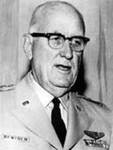
Interview with Lloyd Bentsen Sr. - Part 01
Lloyd Bentsen Sr., Denice Leslie Kemp, and Richard Kemp
Side 1 - Life as a boy in the Dakota's and war years. Side 2 - Dolly and War Years
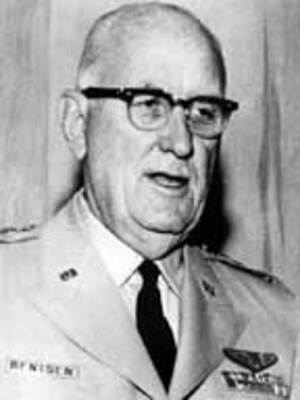
Major General Lloyd Bentsen, Sr. was a pioneer of military aviation. He enlisted in the Aviation Section of the Signal Corps, United States Army during WWI, flew missions as a fighter pilot, commanded the Military Forces of Texas during WWII, and was appointed Commanding General, Texas State Guard Reserve.
-

Interview with Lloyd Bentsen Sr. - Part 02
Lloyd Bentsen Sr., Denice Leslie Kemp, and Richard Kemp
Miscellaneous years in the Valley, marriage, and adventures as a boy.
-
Interview with Mary Margaret “Marge” Bentsen
Mary Margaret Bentsen and Logan Dovalina
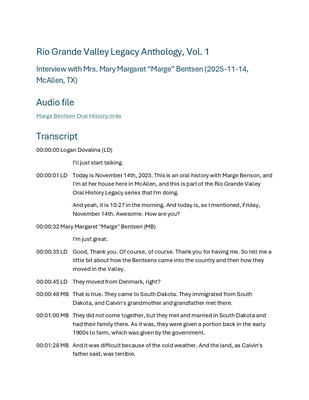
Mary Margaret “Marge” Bentsen (born ca. 1930, Center, Texas), widow of Calvin Bentsen (1925–2024) and daughter-in-law of Elmer Bentsen, recounts the Danish-American Bentsen family’s migration from the harsh winters of South Dakota to the Rio Grande Valley in 1918–1919 and their role in the region’s citrus, banking, real estate, and civic development.
Drawn south by stories of strawberries at Christmas and the promise of year-round farming, the family settled along what became Bentsen Road. Elmer and Lloyd Bentsen Sr. formed a partnership that developed extensive citrus groves, operated the First National Bank chain across the Valley, and engaged in real estate. Marge describes the pre-freeze Mission and McAllen as a fragrant sea of citrus, the springtime scent of orange blossoms that once announced the Valley’s border miles away, and a time when major streets ended in dirt at Jackson Avenue.
After meeting Calvin at Hockaday/SMU in Dallas and marrying in 1949, Marge moved to the Valley in 1950. She chronicles Calvin’s entrepreneurial path: founding Tex-Air (one of the Valley’s first air-conditioning companies), banking directorships, mineral interests, real-estate ventures, and development of the Hidalgo flea market and shopping center. Both were deeply involved in civic life; Calvin as a founder and long-time vice-president of the Gladys Porter Zoo board, hospital trustee, and passionate conservationist and hunter; Marge in the founding of the International Museum of Art & Science (IMAS) and First Methodist Church activities.
The interview touches on the family’s sprawling achievements (U.S. Senator Lloyd Bentsen Jr., Secretary of the Interior Gail Norton, Congressman Ken Bentsen, architects, bankers, and ranchers), the restoration of the ca.-1860s Lacoma Ranch headquarters (now historically marked), and Marge’s gratitude for the strong work ethic, family closeness, and faith instilled by the immigrant generation. At 98, she reflects nostalgically yet appreciatively on the Valley’s transformation from citrus paradise to modern urban corridor, declaring it still “the most wonderful place to live.”
-

Interview with Jimmy K. Beresty - Part 01
Jimmy K. Beresty and Tony G. Hyba
Jimmy K. Beresty relates the drilling of oil wells and specifications in the Rio Grande Valley. He also talks about Raycon oil field, Davenport Ranch, roads in McAllen, sewer systems in the Rio Grande Valley, outhouses, water treatment and storage, rain water, fans, air conditioners, wood stoves, the coming of electricity, employment, enlisting in the Air Force Reserve in Fort Sam Houston, Kelly Air Base, maintaining planes, work at Randall Air Force Base, then at Love Air Field, flying around the world as a result of World War II, A. Y. Baker corruption, Bentsen family, McColl Clubhouse Syndicate, effect of Great Depression, WPA (Works Progress Administration), and opinions on presidents.
-

Interview with Jimmy K. Beresty - Part 02
Jimmy K. Beresty and Tony G. Hyba
Jimmy K. Beresty relates his life history.
-

Interview with Celestino Bernal
Celestino Bernal and Efrain Bernal
Celestino Bernal talks about his early childhood in Mexico and about his life as a farmer in Valle Hermoso, Tamaulipas, Mexico.
-
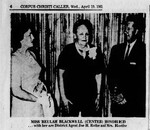
Interview with Beulah Blackwell
Beulah Blackwell and Aubrey B. Gates
This summary was generated with MS Copilot (AI):
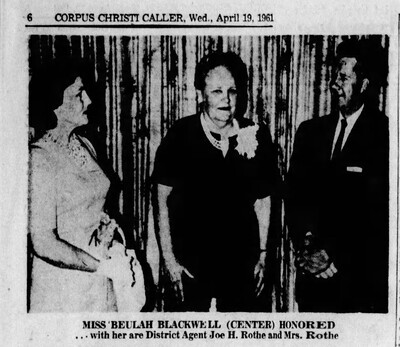
The interview with Beulah Blackwell, conducted by Aubrey B. Gates in 1973, highlights her career as a Home Demonstration Agent and later as a District Extension Agent in Texas. She describes her early work during the Depression, focusing on food conservation, canning, and improving diets for rural families, as well as programs in clothing, furniture restoration, and home beautification. Blackwell also discusses the evolution of Extension work in the Rio Grande Valley, including 4-H youth programs, adult leader workshops, and community development efforts. She reflects on how modern conveniences like electricity and good roads transformed rural life and notes that while Extension was once vital, its role has diminished due to increased opportunities and organizations for women.
-

Interview with Weldon C. Blackwell
Weldon C. Blackwell and Glenn Housley
Weldon C. Blackwell tells about the early days of Weslaco, including his home life, church, and family.
-
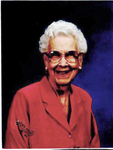
Interview with Frances Wood Borman
Frances Wood Borman and Betty Fogarty
Frances Wood Borman tells of her family moving to the Valley from the North in the early part of the century. She describes family values, her way of life as a child and young housewife.
-

Interview with William Bill Borman
William Bill Borman and Robert Everett Norton
William Borman tells about his life. Topics include Birth in Arkansas, schooling in McAllen, first job. San Juan store, city debt, difficulty in starting store, city management as Mayor, streets, banking, secret of success.
-

Interview with Maurice Boyd Cramer
Maurice Boyd Cramer and Robert Everett Norton
Maurice Boyd Cramer born on 12 December 1916, in Sarcoxie, Jasper, Missouri, tells of early life in Missouri, an excursion train to the Valley, Hidalgo County Irrigation District #2, pump house in Hidalgo, Camp Ebenezer (Alamo), dairy and cotton farming, early San Juan schools, and flood control. He died on 3 July 2004, in Corpus Christi, Texas.
-
Interview with James B. Boyd
James B. Boyd, Bill Foerster, and Robert Norton
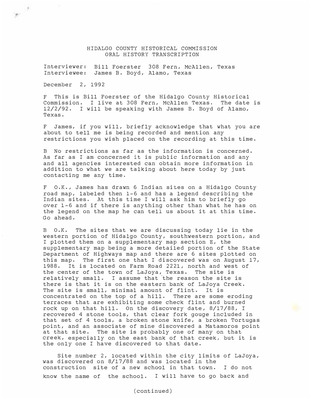
James B. Boyd describes six Native American archeological sites he had mapped in western Hidalgo County, beginning with discoveries near La Joya Creek and a school construction site. He detailed artifacts such as Matamoros points, Tortugas dart points, scrapers, and crude stone tools found across multiple visits, noting variations in richness depending on site disturbance. The final site, Chihuahua Hill, stood out as unusually rich for Hidalgo County, though Boyd emphasized these sites were modest compared to larger finds in neighboring counties and northern Mexico. (Transcription by Robert Norton)
-

Interview with Lucy Brandt
Lucy Brandt and Silvia Ann Olivarez
Lucy Vavra Brandt talks about her early life and the Great depression.
-

Interview with Elizabeth B. (Sammons) Brazeal
Elizabeth B. Brazeal and Robert Everett Norton
Mrs. Elizabeth Boyd (Sammons) Brazeal (wife of Clay Brazeal) discuss early life, parents, education and marriage. As the daughter of a prominent early Valley businessman and the wife of another, she makes observations about life in the Mission area.
-

Interview with Harold E. Brehm
Harold E. Brehm and Robert Everett Norton
Harold E. Brehm was born December 10, 1897. He came to the Valley in 1924. He talks about the progress of the city of McAllen.
Grandfather had interesting life with Maximillian, also early life in Kansas. Interesting move to Valley, business structure of South Main in McAllen during 1920's, floods on airport property, change in tourists, Jackson family, use of trains, observations on climate.
-

Interview with Maria Brewster Castillo
Maria Brewster Castillo and Norma Linda Castillo
Maria Brewster Castillo tells how the Brewster family came from Mississippi or Alabama in covered wagons during the late 1800's. Her father was a Texas Ranger. Her family always had plenty of food, therefore she never experienced the Great depression.
-

Interview with Darrell Clark Brumley
Darrell Clark Brumley and Harry Carter Quin
Darrell Brumley was born June 15, 1916 in Chikoda, Oklahoma. His father's name was Walter Clark Brumley and his mother's name was Ethel May Peeky. He mentions his education at Edinburg College.
Early days of Valley, beginning with 1933 hurricane through history to Pan American University.
-

Interview with Irene Bullion
Irene Bullion and Edna D. Salinas
Irene Bullion tells about her family and the Great depression.
-
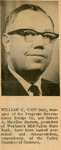
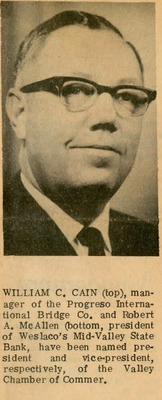
Interview with William "Bill" Cain
William Cain and Aubrey B. Gates
Summary generated with MS Copilot (AI) The interview with William “Bill” Cain, conducted on December 6, 1973, covers his family’s move to the Rio Grande Valley in 1935, his education, military service in World War II and Korea, and his later involvement in the grain business and bridge development. Cain explains the history of privately built international bridges along the Rio Grande, focusing on the Progreso Bridge, which his company constructed in 1953 after earlier ferry and pontoon solutions failed. He details challenges such as securing 24-hour customs service, negotiating with Mexican authorities for infrastructure, and the economic impact of the bridge on the Mid-Valley region. The conversation concludes with reflections on traffic growth, future expansion plans, and the bridge’s role in fostering cross-border commerce and community ties.
-
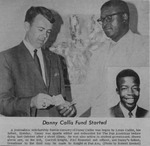
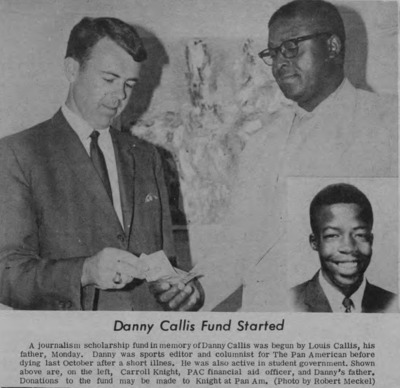
Interview with Lewis Callis
Lewis Callis and Diana Barrientes
Mr. Lewis Callis (1920-2003) worked for the US Postal Service for over 26 years in Edinburg, TX, and was the city's first Black mail carrier. He was born in January 8, 1920 in Freeman, Virginia. He married Ms. Lenora White (1921-1968) and the couple raised their family in Edinburg.
In this interview, he reflects on farmwork, his childhood, hobbies, and military service during WWII. He was one of five brothers serving active duty during WWII.
Mr. Callis also shares details about specific crops and harvests, homemade toys, local churches, and run ins with dogs on his postal route.
-

Interview with Charles Edward Cameron
Charles Edward Cameron and Robert Everett Norton
Charles Edward Roi Cameron was born on July 6, 1906 in Gomez Farias, Tamaulipas. His name is Scottish. His father was Scottish and his mother was French Canadian. He talks about the Mexican Revolution.
Father's life in Canada including member of Royal Canadian Mounted Police, medical school, move to Mexico and life there. Move to United States in 1916, work with troops there. Birth of family in Mexico. Life in U.S. in 1920's, the Reynosa-Hidalgo Ferry. Schooling in Pharr and McAllen, work during summer. Land features of the Valley, disasters. War service, teaching, marriage, family, work as customs inspector.
-

Interview with Alicia Cano
Alicia Cano and Robert Andrew Nelson
Alicia Cano talks about having Spanish parents. She mentions struggling in the U.S. and teaching children old morality customs.
-

Interview with Benilde Cano
Benilde Cano and Mytla Pecina
Benilde Cano talks about growing up on a small ranch and the great interest her family has always had in commerce.
-

Interview with Guadalupe Cano
Guadalupe Cano and Andy Longoria Perez
Guadalupe Cano talks about life on a farm and about animals.
-

Interview with Fidela R. Cantu
Fidela R. Cantu and Corina Cantu
Fidela R. Cantu talks about her family background, personal life, education, religion, social status, working conditions and her present life.
-

Interview with Juanita Rosales Cantu
Juanita Rosales Cantu and Robert A. Hinojosa
Juanita Rosales Cantu born on April 21, 1950, talks about her life, including: her childhood, working as a migrant worker, her battle with breast cancer, medicine in the United States, her time as a mother, language exams to enter Pan American College, University of Texas Pan American, pesticide related illnesses, and her time working with U.S. Customs Service. She also tells of family stories, including: bootlegging, violence against Hispanics, and U.S. Customs Service.
-

Interview with Magdalino "Mike" Cantu
Magdalino Cantu and Crystal Marie Cantu
Magdalino Cantu talks about his early life in Mexico.
-
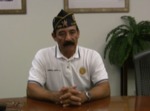
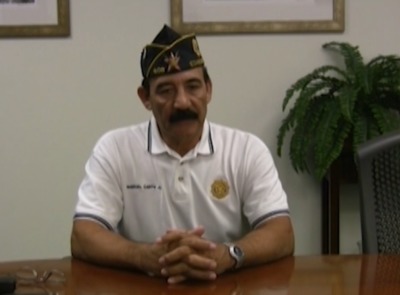
Interview with Manuel Cantu, Jr.
Manuel Cantu Jr, Charles J. Ellard, and Jaime Cardoza
Manuel Cantu (b. 1952) was interviewed by Charles J. Ellard for the "Veterans History Project 2009" on September 22, 2009 at the Dustin M. Sekula Memorial Library. The interview was video recorded by Jaime Cardoza.
Mr. Cantu speaks about his military service in the U.S. Army with the Signal Corps, including enlistment, training, and assignments. He also discusses the mentoring and service opportunities for veterans and offers words of encouragement for young people.
This interview has been archived at the Library of Congress as part of the Veterans History Project
-

Interview with Maria Cantu
Maria Cantu and Guadalupe Torres
Maria Cantu describes her early life at the rancho in Edinburg. She talks about her parents, sisters, brothers, crops, animals, funerals, women's role, clothing and compares the old time to the present.
-
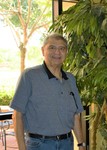
Interview with Ricardo M. Cantu
Ricardo M. Cantu and Kelly Saenz
Ricardo M. Cantu talks about growing up in the Rio Grande Valley, his father's work with the Valley Fruit Company, Hurricane Beulah, his time as a Disc Jockey in KURV and KRGV, academics, the Pharr Riot, and discrimination he has faced as a Hispanic. Interview conducted on October 14, 2017 by Kelly Saenz in Brownsville, Texas. Ricardo passed away on August 12, 2020.
-

Interview with Ricardo Cantu
Ricardo Cantu and Kelly M. Saenz
Ricardo M. Cantu talks about growing up in the Rio Grande Valley, his father's work with the Valley Fruit Company, Hurricane Beulah, his time as a Disc Jockey in KURV and KRGV, academics, the Pharr Riot, and discrimination he has faced as a Hispanic. Interview conducted on October 14, 2017 by Kelly Saenz in Brownsville, Texas. Ricardo passed away on August 12, 2020.
-
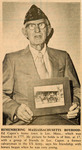
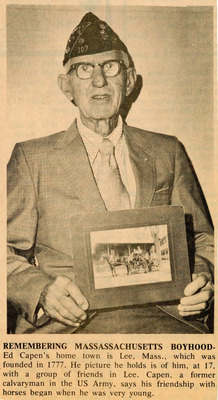
Interview with Edward A. Capen (veteran)
Edward A. Capen and Aubrey B. Gates
Summary generated using MS Copilot (AI) Edward A. Capen recounts his first arrival in the Rio Grande Valley in 1915 as a member of the 6th U.S. Cavalry, deployed after the Texas City hurricane to patrol the border during bandit raids. He describes the Valley’s early conditions—brush-covered land, deep sand roads, and small towns like Harlingen and Donna—along with life as a horse-mounted soldier, including patrols, camp life, and logistics. Capen later participated in the Pancho Villa Expedition, served through World War I and II, and eventually settled in Donna, where he worked for Central Power and Light and served as mayor. His reflections highlight dramatic changes in infrastructure, politics, and community life over six decades.
-

Interview with Anita Cardenas
Anita Cardenas and Leticia Miroslava Gamboa
Anita Cardenas talks about slavery, how business started in the 1950's, her all day wedding in 1930 and how clothes were hand-made.
-

Interview with Santos Cardoza
Santos Cardoza and Rocio Patricia Rodriguez
Santos Cardoza was born in Mendez, Tamaulipas, in 1901. She talks about her life without her mother. She also mentions sewing classes.
-

Interview with Cora Carson
Cora Carson and Cynthia E. Garza
Cora Carson born in 17 March, 1923 in Iowa talks about her life history.
-

Interview with Vernon Carson
Vernon Carson and Cynthia E. Garza
Vernon Carson talks about his life history and his World War II experiences.
-

Interview with Cosme Casares Munoz
Cosme Casares Munoz and Leticia Miroslava Gamboa
Cosme Casares Munoz was born in 1915 in McAllen, Texas. He talks about the first schools in McAllen, Los Rinches, Texas Rangers, and Los Indiciosos, why they hung 30 people in Alamo, Texas, laborers, and camps of soldiers in 1919. He tells about "diez y quince" stores and the first cars sold.
-

Interview with Genoveva Castaneda Dominguez, Enriqueta Jalifi
Genoveva Castaneda Dominguez, Enriqueta Jalifi, and Diana Barrientes
[00:00:00-00:45:30] Genoveva Castaneda was born in 1904 in Rosario, Texas . She talks about: growing up, customs and education. [00:45:31-00:91:00], Enriqueta Jalifi was born in 10 October 1903 in Toluca Ranch. She talks about discrimination in school and church, the Great depression, and the economy.
-

Interview with Eduardo Castellanos
Eduardo Castellanos
Oral History interview of Eduardo Castellano talking about the Great depression, and working in the fields. Unknown date of original recording.
-

Interview with Adela Castilleja
Adela Castilleja and Oralia Betancourt
Adela Castilleja tells about life in San Luis Potosi, Mexico, and in Edinburg, Texas.
-

Interview with Juan Castillo
Juan Castillo and Corina Castillo
Juan Castillo born on 06 July, 1922 tells about growing up during the 1930's.
-

Interview with Juan Castillo
Juan Castillo and Miguel Torres
Juan Castillo, born in 1895 in San Luis Potosi, talks about life in the Valley when he was young, the place and date of his birth. He mentions the reasons he came to the Valley and the jobs he had.
-

Interview with Francisca M. Castro - Part 01
Francisca M. Castro and Augustine Farias
Francisca M. Castro talks about where she was born and what her life in Mexico was like.
-

Interview with Francisca M. Castro - Part 02
Francisca M. Castro and Augustine Farias
Francisca M. Castro talks about where she was born and what her life in Mexico was like.
-

Interview with Francisca M. Castro - Part 03
Francisca M. Castro and Augustine Farias
Francisca M. Castro talks about where she was born and what her life in Mexico was like.
-

Interview with Francisca M. Castro - Part 04
Francisca M. Castro and Augustine Farias
Francisca M. Castro talks about where she was born and what her life in Mexico was like.
-

Interview with Francisca M. Castro - Part 05
Francisca M. Castro and Augustine Farias
Francisca M. Castro talks about where she was born and what her life in Mexico was like.
-

Interview with Francisca M. Castro - Part 06
Francisca M. Castro and Augustine Farias
Francisca M. Castro talks about where she was born and what her life in Mexico was like.
-
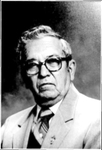
Interview with Elias Cavazos - Part 01
Elias Cavazos and Robert Everett Norton
Elias Cavazos talks about his parents and grandparents. He discusses his early years in McAllen. He tells about his working experience with the railroads and as a telegrapher at Western Union. He shares his progress through Western Union including moving to distant cities as he was promoted. He tells about the changes that McAllen and the Rio Grande Valley experienced between 1925 and 1977. He also discusses lands and Porciones in the Valley and how lands including Porcion 72 came to be under his family and relatives and then sold. He mentions his experiences in New York City where he lived and worked. He also talks about his wife Catherine Cavazos.
-

Interview with Elias Cavazos - Part 02
Elias Cavazos and Robert Everett Norton
Elias Cavazos talks about his parents and grandparents. He discusses his early years in McAllen. He tells about his working experience with the railroads and as a telegrapher at Western Union. He shares his progress through Western Union including moving to distant cities as he was promoted. He tells about the changes that McAllen and the Rio Grande Valley experienced between 1925 and 1977. He also discusses lands and Porciones in the Valley and how lands including Porcion 72 came to be under his family and relatives and then sold. He mentions his experiences in New York City where he lived and worked. He also talks about his wife Catherine Cavazos.
-

Interview with Andrew Champion - Part 01
Andrew Champion and Robert Everett Norton
Andrew Champion relates the story of the Champion family, the history of Donna, Texas.
Mr. Champion discusses a family life in Progresso.
His grandparents: Peter Bronzin Champion (Campeoni) and Maria Felicita Flor Solisenos
His father: Andrew Solis Champion, Sr., who was a Texas Ranger
Military service: WWI and WWII
Industry: Oil fields
-

Interview with Andrew Champion - Part 02
Andrew Champion and Robert Everett Norton
Andrew Champion relates the story of the Champion family, the history of Donna, Texas.
-

Interview with Amancio Chapa Sr.
Amancio Chapa Sr. and Robert Everett Norton
No summary information.
-

Interview with Jose E. Chapa
Jose E. Chapa and Douglas E. Erickson
Jose E. Chapa talks about land prices, history and genealogy of Chapa family, the Great depression, political affiliations, Mexican Americans from the Rio Grande Valley in politics, farming, and traveling the world. Mr. Chapa passed away on 7 August, 2011.
-

Interview with Jesus Chavana
Jesus Chavana and Oralia Betancourt
Jesus Chavana relates his experiences in World War II in 1942.
-
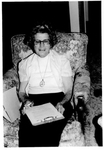
Interview with Ada Lee (Richmond) Chisum
Ada Lee Chisum and Robert Everett Norton
Ada Lee Richmond Chisum, born on 21 July 1908, relates the story of her grandparents moving to Texas in the late 1800's. Her father worked for the railroad in Yoakum. All the children were born in Yoakum. She tells of early McAllen, the soldiers stationed in McAllen, Richmond Plumbing Company, the Great depression, and the Old Timers Club. She died on 22 May 1996.
-
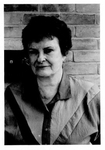
Interview with Elizabeth Ewing Christenson
Elizabeth Ewing Christenson and Robert Everett Norton
Elizabeth Ewing Christenson was born February 26, 1920, in McAllen, Texas. She tells of growing up in the city of McAllen.
-

Interview with Harry Cole
Harry Cole and Marilyn R. Nowak
- 00:00 - Introduction and Cole's background.
- 04:18 - How Cole raised his children.
- 07:15 - The changes to the Rio Grande Valley Cole has seen.
- 09:13 - How Cole feels about Mexico and whether or not he visits.
- 18:45 - Cole's daughters.
- 21:15 - Cole's grandchildren.
- 23:17 - Religion.
- 24:32 - Smoking.
- 33:00 - How Cole feels about work/working.
- 34:40 - Education.
- 37:30 - Sports.
- 38:28 - Cole's feelings about World War II and war in general.
- 42:51 - Cole's feelings about television.
- 44:00 - When the Coles got married and how old they were.
- 44:58 - Harry and his wife's age difference, and whether or not they would allow their daughter to marry someone that much older.
- 48:00 - Divorce.
-

Interview with Shelley Hale Collier Sr.
Shelley Hale Collier Sr.
Shelley Hale Collier, Sr. was born on 07 July 1896 and passed away on 04 July 1984. Mr. Collier served in the US Army Motorcycle Corps during WWI.
-

Interview with Maria Compian
Maria Compian and Sandra Cardenas
[Maria Compean] No summary information.
-

Interview with Maria Conde
Maria Conde and Sandra Cardenas
Maria Conde was born in San Benito, Texas, on October 21, 1919. She tells about her schooling, marriage, and life in a well-to-do neighborhood.
-

Interview with Concha M. Cortez
Concha M. Cortez and Joseph S. Hoy
Concha M. Cortez, born 16 March 1918, tells of her early life in Los Herrera, Nuevo Leon, Mexico, and of living in the Rio Grande Valley.
-

Interview with Estella Minerva Cuellar
Estella Minerva Cuellar and Janis Gray Wood
Estella Minerva Cuellar is a native of the Rio Grande Valley, a retired classroom teacher, a president of the McAllen ISD school board, and has been involved in education all her life. She talks about the challenges and changes in education.
-

Interview with Celia Cuenca Cardenas
Celia Cuenca Cardenas and Merardo Macal
Celia Cuenca was born 19 October 1923. She talks about her early life.
-

Interview with Willella Curnutt
Willella Curnutt and Arnulfo Salinas
Willella Curnutt talks about education, Great depression, and descendancy.
-

Interview with Samuel Curry
Samuel Curry and Robert Everett Norton
Samuel Curry was born on 14 November 1903. Grew up and went to school at the Toluca Ranch. No summary information.
-

Interview with Guadalupe de la Garza - Part 01
Guadalupe de la Garza and Rocio Patricia Rodriguez
Guadalupe de la Garza gives a detailed history of her life. She talks about her childhood, religion, superstition, and life as a wife. Part 1 of 3.
-

Interview with Guadalupe de la Garza - Part 02
Guadalupe de la Garza and Rocio Patricia Rodriguez
Guadalupe de la Garza gives a detailed history of her life. She talks about her childhood, religion, superstition, and life as a wife. Part 2 of 3.
-

Interview with Guadalupe de la Garza - Part 03
Guadalupe de la Garza and Rocio Patricia Rodriguez
Guadalupe de la Garza gives a detailed history of her life. She talks about her childhood, religion, superstition, and life as a wife. Part 3 of 3.